

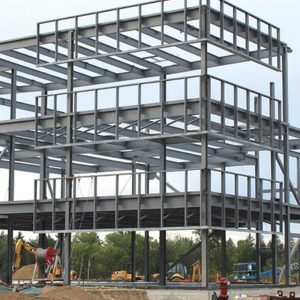
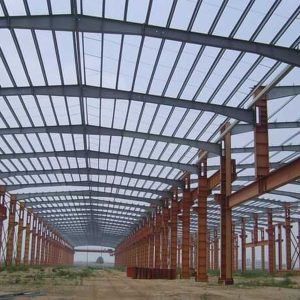
Types of Steel Grid Structures
By Grid Pattern
| Type | Description | Best For |
| Two-Way Grid | Members intersect at 90° (square/rectangular) | Roofs, floor decks |
| Three-Way Grid | Triangular pattern (higher torsional stiffness) | Domes, complex geometries |
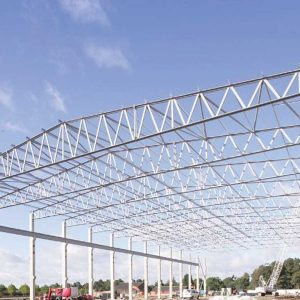
| Space Frame | 3D truss-like structure (double-layer grid) | Long-span roofs, arenas |
| Cable Grid | Tensioned cables + steel members | Lightweight tensile structures |
By Connection Method
- Bolted Sphere Nodes – Prefabricated spherical joints (MERO system).
- Welded Nodes – Higher strength, custom designs.
- Threaded Connectors – Adjustable assembly (Unistrut-type systems).
Key Components
- Grid Members – Circular/rectangular hollow sections (CHS/RHS).
- Nodes – Spherical, welded, or bolted connection points.
- Support System – Fixed, hinged, or sliding bearings.
- Cladding – Glass, polycarbonate, or metal panels.
Advantages of Steel Grid Structures
- Ultra-Long Spans (50–200m+) – Minimal columns needed.
- Lightweight – 30–50% lighter than conventional steel frames.
- Architectural Freedom – Curved, domed, or free-form shapes possible.
- Fast Construction – Prefabricated modules for quick assembly.
- Seismic Resistance – Excellent load distribution.
Common Applications
- Stadiums & Arenas – Roof structures (e.g., Olympic stadiums).
- Airports – Terminal roofs (e.g., Beijing Daxing Airport).
- Exhibition Centers – Column-free spaces.
- Atriums & Skylights – Glass-covered grid shells.
Reviews
There are no reviews yet.