Types of Steel Building Frames
A. Rigid Frame (Portal Frame)
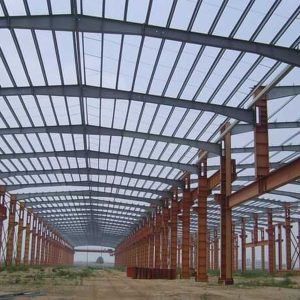
- Structure: Columns + rafters connected by rigid joints.
- Span: 20–60m (clear span).
- Best for: Warehouses, factories, aircraft hangars.
B. Braced Frame
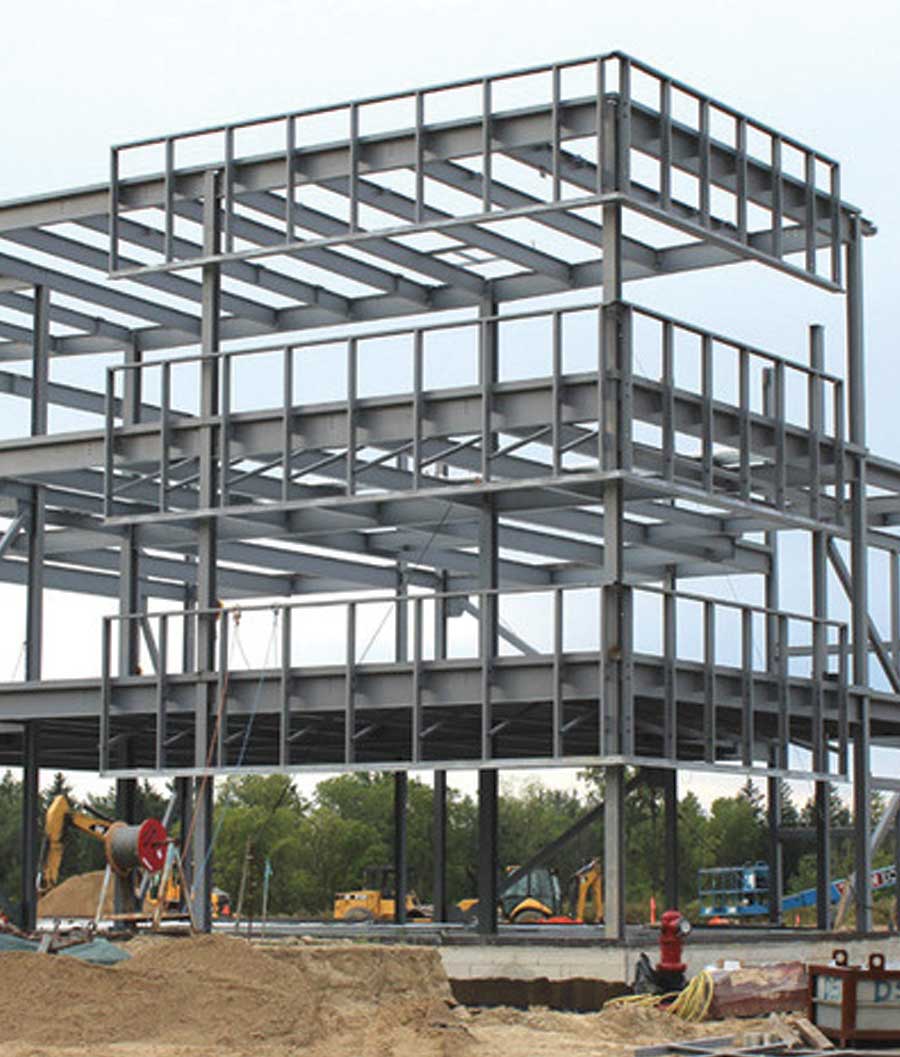
- Structure: Vertical columns + diagonal bracing (X, K, or V-bracing).
- Span: 10–30m (requires internal bracing).
- Best for: High-rise buildings, seismic zones.
C. Modular Frame
- Structure: Prefabricated steel modules assembled on-site.
- Span: Depends on module size.
- Best for: Schools, hospitals, fast-build projects.
D. Truss Frame
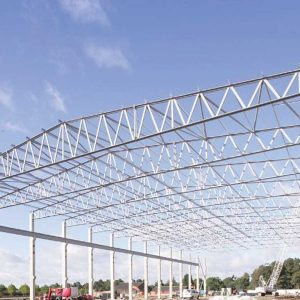
- Structure: Triangular trusses for long-span roofs.
- Span: 30–100m+.
- Best for: Stadiums, airports, large event halls.
E. Cable-Supported Frame
- Structure: Steel cables + masts for tension support.
- Span: 50–200m+.
- Best for: Bridges, tensile structures, iconic roofs.
Key Components of a Steel Frame Structure
| Component | Function | Common Materials |
| Primary Frame | Main load-bearing structure (columns, beams) | Universal beams (UB), I-sections |
| Secondary Frame | Supports cladding (purlins, girts) | C/Z-sections (galvanized steel) |
| Connections | Joins beams, columns, and bracing | Bolted, welded, or moment-resisting |
| Bracing | Provides lateral stability | Angle bars, hollow sections |
| Base Plates | Anchors columns to foundation | Thick steel plates + anchor bolts |
| Cladding | Roof/wall covering | Metal sheets, sandwich panels |
Advantages of Steel Frame Structures
High Strength-to-Weight Ratio – Stronger than concrete or wood.
Fast Construction – Prefabricated components reduce build time.
Design Flexibility – Adaptable for arches, curves, and cantilevers.
Durability – Resists fire, termites, and corrosion (if properly coated).
Sustainability – Recyclable and reduces construction waste.
Common Applications
Industrial – Factories, warehouses, power plants.
Commercial – Offices, malls, airports.
Residential – High-rises, prefab homes.
Specialized – Stadiums, bridges, transmission towers.

Reviews
There are no reviews yet.