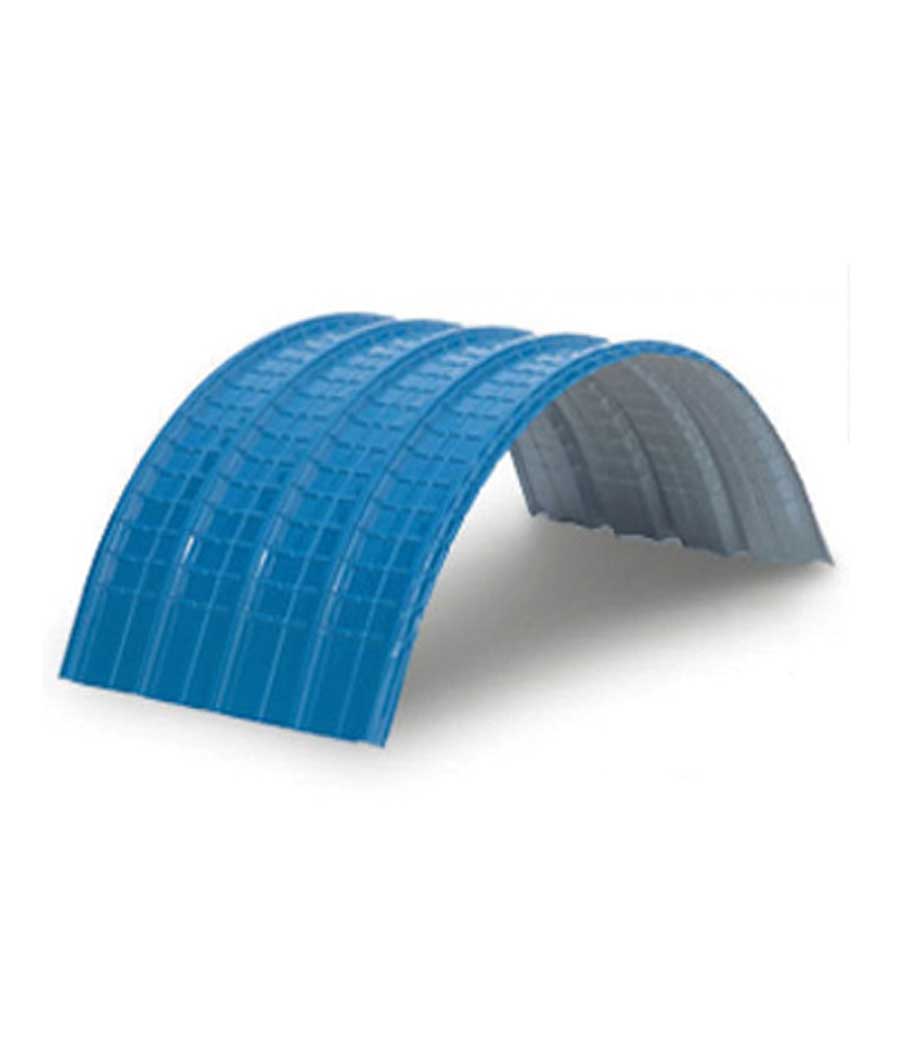
Types of Curved Roofing Sheets
Single Curved Sheets:
- Curved in one direction (e.g., semicircular or parabolic).
- Commonly used for simple arched structures.
Double Curved Sheets:
- Curved in two directions (e.g., dome-shaped or hyperbolic).
- Used for complex architectural designs.
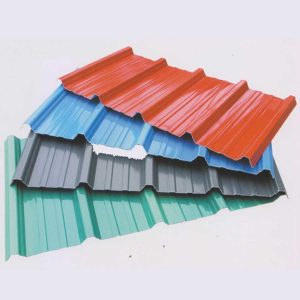
Corrugated Curved Sheets:
- Feature a wavy or corrugated pattern for added strength.
- Ideal for industrial and agricultural buildings.
Trapezoidal Curved Sheets:
- Have a trapezoidal profile for enhanced rigidity.
- Suitable for large-span structures.
Standing Seam Curved Sheets:
- Feature vertical seams for a sleek, modern look.
- Often used in commercial and residential projects.
- Materials Used for Curved Roofing Sheets
Galvanized Steel:
- Coated with zinc for corrosion resistance.
- Durable and cost-effective.
Galvalume Steel:
- Coated with a mix of aluminum and zinc.
- Offers better corrosion resistance than galvanized steel.
Aluminum:
- Lightweight and highly resistant to rust.
- Ideal for coastal areas or chemical exposure.
Stainless Steel:
- Highly durable and resistant to corrosion.
- Used in harsh environments.
Polycarbonate:
- Lightweight and transparent, allowing natural light.
- Used in greenhouses, skylights, and canopies.
Fiberglass:
- Lightweight and durable, with good insulation properties.
- Used in industrial and agricultural buildings.
Applications of Curved Roofing Sheets
Industrial Buildings:
- Factories, warehouses, and workshops.
- Provides large, uninterrupted roof spans.
Commercial Buildings:
- Shopping malls, airports, and exhibition halls.
- Enhances architectural appeal.
Agricultural Buildings:
- Barns, greenhouses, and storage sheds.
- Offers durability and weather resistance.
Residential Buildings:
- Modern homes and villas with curved roof designs.
- Adds a unique aesthetic touch.
Sports and Recreational Facilities:
- Stadiums, gyms, and swimming pools.
- Provides large, open spaces.
Transportation Structures:
- Bus stops, railway stations, and airport hangars.
- Offers protection from the elements.
Installation Process
Design and Planning:
- Determine the curvature and dimensions of the roof.
- Choose the appropriate material and profile.
Fabrication:
- Pre-curve the sheets to match the roof design.
- Use specialized machinery for precise bending.
Preparation:
- Ensure the roof structure is strong enough to support the sheets.
- Install underlayment for waterproofing.
Installation:
- Align the curved sheets properly and secure them to the roof structure.
- Use screws, clips, or adhesives for fixing.
Sealing and Finishing:
- Seal joints and edges to prevent water leakage.
- Apply protective coatings if necessary.
Reviews
There are no reviews yet.